Journals get citation machinery. You don’t need a journal.
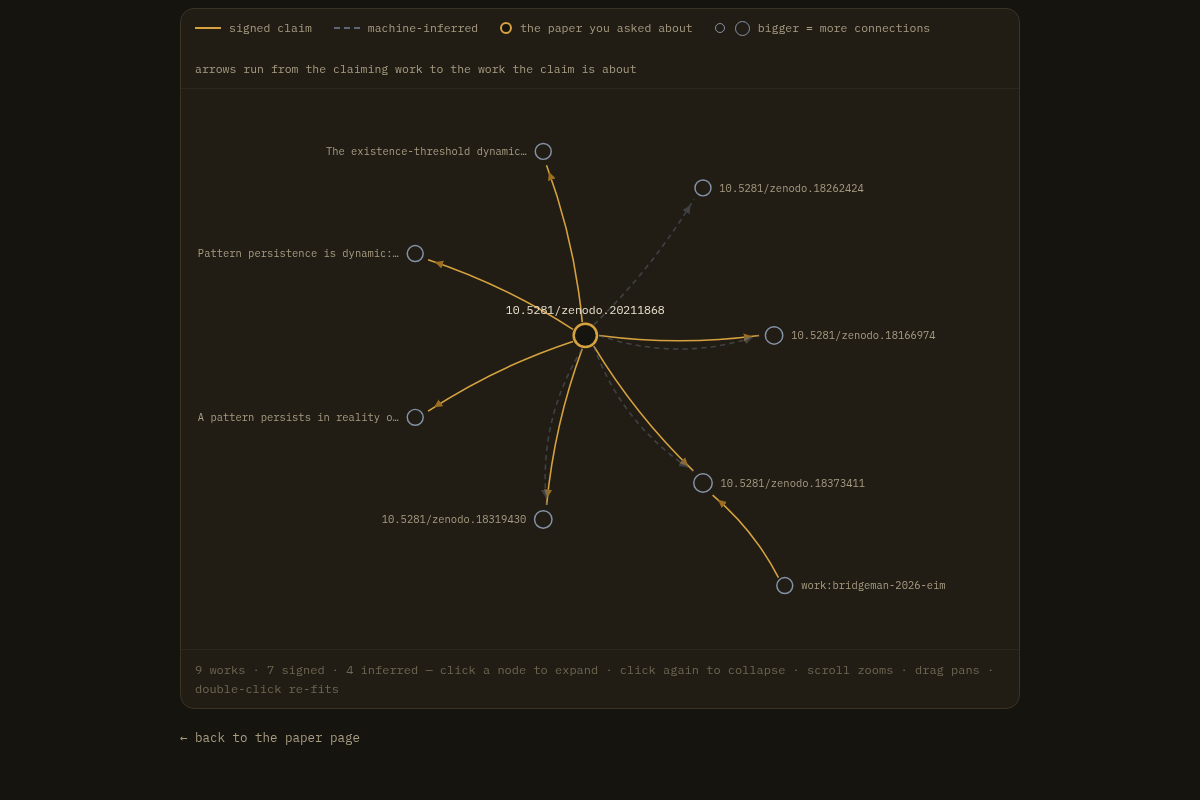
Every identifier in the graph gets a public page and a map you can walk: what your work cites, what cites it, and what kind of relationship each one is. Preprints, Zenodo deposits and datasets are in it, not only what the big indexes chose to cover. It is free, it needs no account, and the record is CC0, so it outlives any one operator including us.
What the record gives you
- A public page for your paper. Every identifier in the graph gets one, listing what your work cites and what cites it, each claim labelled signed or inferred.
- Citations that say something. Plain “cites” is flat. Typed claims record that a paper supports yours, refutes a result, extends a method, uses your dataset.
- A priority trail. Signed claims are timestamped and chained on a public log. When it matters who said what first, the record is already public and already ordered.
- A place AI assistants check. CiteStamp runs a live endpoint AI agents query before they cite, so when an AI summarizes your field there is a public, labelled record to consult instead of a guess.
Claim your paper in two minutes
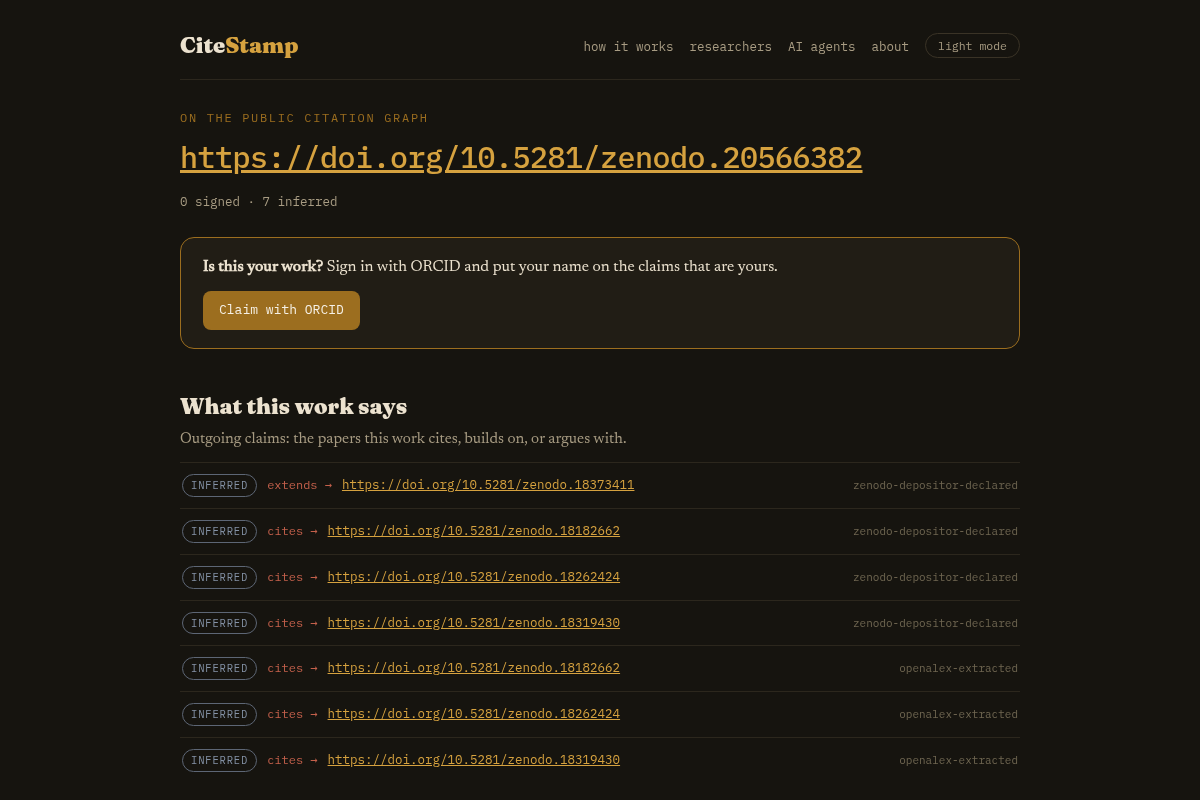
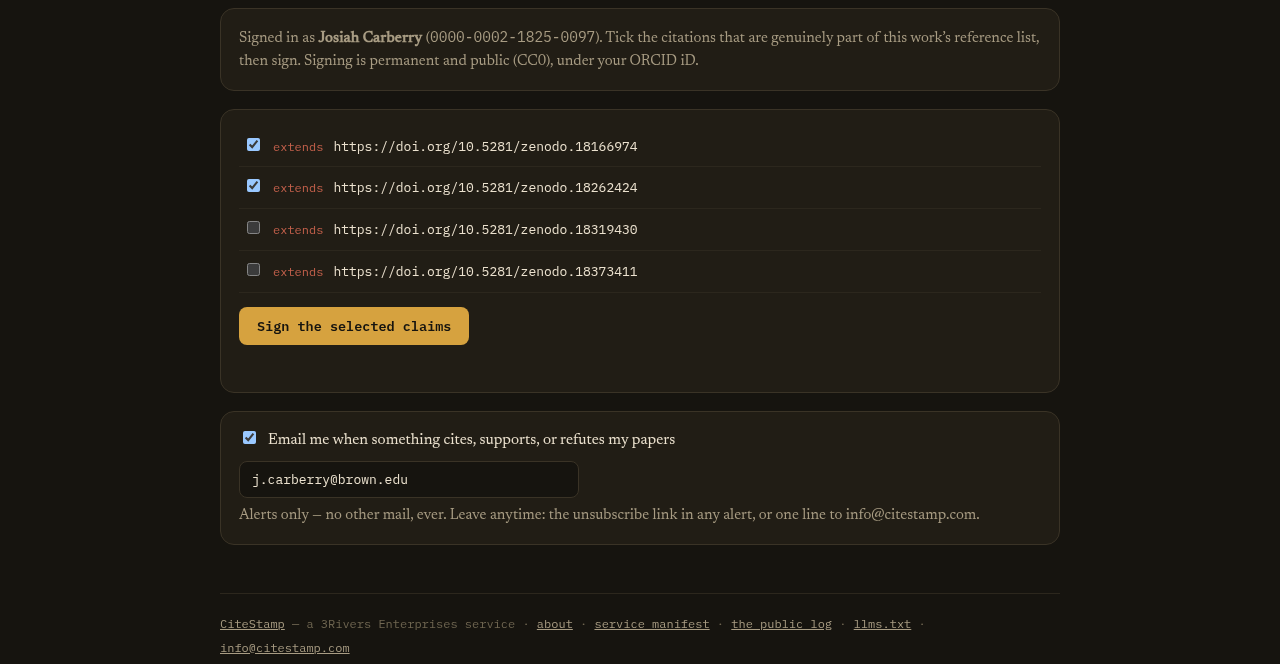
Machine sweeps of Zenodo and SSRN metadata have already mapped citations for hundreds of thousands of works. Search your DOI on the main page, open the paper page, and follow Claim with ORCID: pick the citations that are really yours and put your name on them. Your ORCID sign-in proves identity; authorship is checked against the work’s own metadata, and a human curator handles anything the metadata can’t settle.
And check your references before a reviewer does
AI writing tools invent citations: plausible authors, real-looking DOIs, papers that were never written. arXiv suspends authors over it. Paste your bibliography into the health check and every reference is checked in your browser: does it resolve, does the title match its DOI, is it marked retracted. Free, unlimited, no account, and your bibliography is never uploaded; no document ever reaches us.
What it costs
The checker, the graph, the paper pages, and signing your own work: free. Pro is $35 a year — a higher-rate API token for people and programs that hit the graph hard, and a way to keep an independent citation graph running. The pricing page lists exactly what Pro includes today; nothing on it is a preview. Signing keys for the full minting surface are issued by hand while the service is small: info@citestamp.com.
What we will never do with your data
There is almost none to misuse. The graph stores links between public identifiers — no full text, no abstracts, no personal data on the record. Claims are CC0 and the whole log is publicly forkable, so the record outlives any one operator, including us.